
The Power of Externalized Thought
Getting Things DoneThe book explores how recorded ideas improve thinking by freeing the mind from storage and providing a surface for new connections.
increasing Bearing strength in each event
 decreasing
Bearing strength in each eventdecreasingMemory Is Not a Workbench

The Mind’s Limited Store
Attention Has Capacity
Allen compares short-term mental storage to computer memory with limited capacity. The conscious mind is better understood as a focusing tool than as a place to retain every unfinished detail.
Too much unprocessed material can disrupt concentration.
A Costly Use of Thought
Repeatedly remembering a commitment consumes mental effort without necessarily moving it forward. The mind is occupied with recall instead of judgment, creativity, and action.
The argument establishes why external reminders are not a failure of memory but a practical use of it.
Ideas Leave the Head
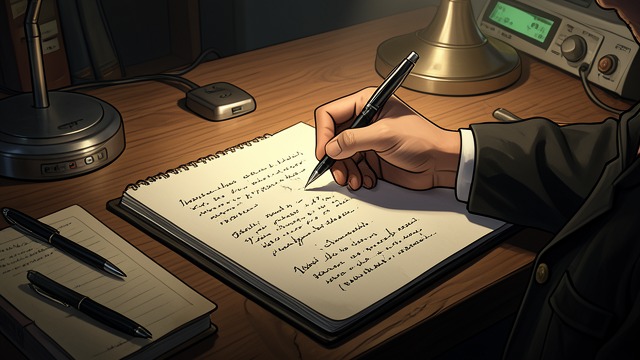
Recording Makes Thought Visible
Separate Items Can Be Examined
Writing each thought on paper gives it a visible form that can be handled and reviewed. A person can capture unrelated ideas without forcing them into a premature order.
The external page becomes a temporary surface for thinking.
Distance Enables Judgment
Once an idea is recorded, the person can decide later whether it belongs in an action list, a project plan, or nowhere at all. Capture separates having a thought from committing to act on it.
Externalization makes it easier to keep possibilities without being ruled by them.
Recorded Ideas Generate More

A Surface Reflects Thought
Seeing Connections
An external record can prompt ideas that might not have appeared in unaided thought. The person sees what has been captured and can notice gaps, associations, and new directions.
Tools support thinking by holding earlier contributions in view.
Quantity Before Judgment
A visible set of ideas makes it easier to continue brainstorming without requiring immediate evaluation. The growing record can be rearranged or grouped once the creative phase has produced enough material.
The external surface functions as a partner in thinking, not merely an archive.
Structure Emerges from Material
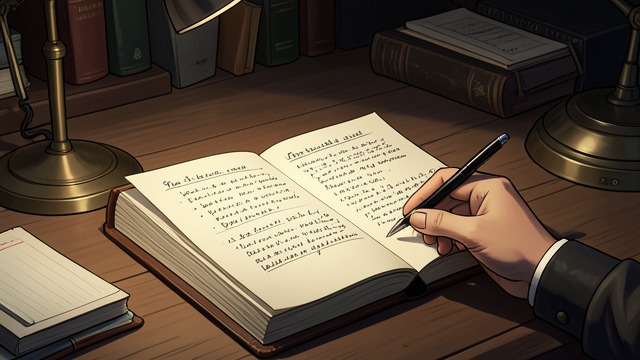
Ideas Find Relationships
Components Become Apparent
When recorded ideas are reviewed together, natural groupings and sequences may become visible. The person can identify components, priorities, dependencies, and missing information.
Organization works more effectively after ideas have been allowed to appear.
From Raw Thought to Plan
The external record can be transformed into a structure that supports action. The original brainstorming need not be preserved in every detail if its useful conclusions have been captured.
Thinking advances through distinct activities rather than through one prolonged attempt to solve everything internally.
The Mind Is Freed for Value

Thinking About Rather Than Remembering
A Change in Mental Work
When reminders and project notes are held externally, the mind can focus on developing ideas and making choices. The person does not need to rehearse the same obligations simply to ensure they are not lost.
Storage is delegated to a system that can be reviewed.
Creativity Gains Room
External organization can support more rather than less creativity because ideas need not be discarded or constantly retained in memory. The mind can work with the material when attention and context are appropriate.
The theme resolves in a partnership between human thought and objective tools.
When Allen compares mind and computer memory
During the mind-sweep and brainstorming sections
As brainstorming continues on paper or a board
After the brainstorming phase
After a reliable external system is established
